Patterns Connecting Blackjack Table Minimum Adjustments to Football Parlay Modifications on Integrated Operator Dashboards
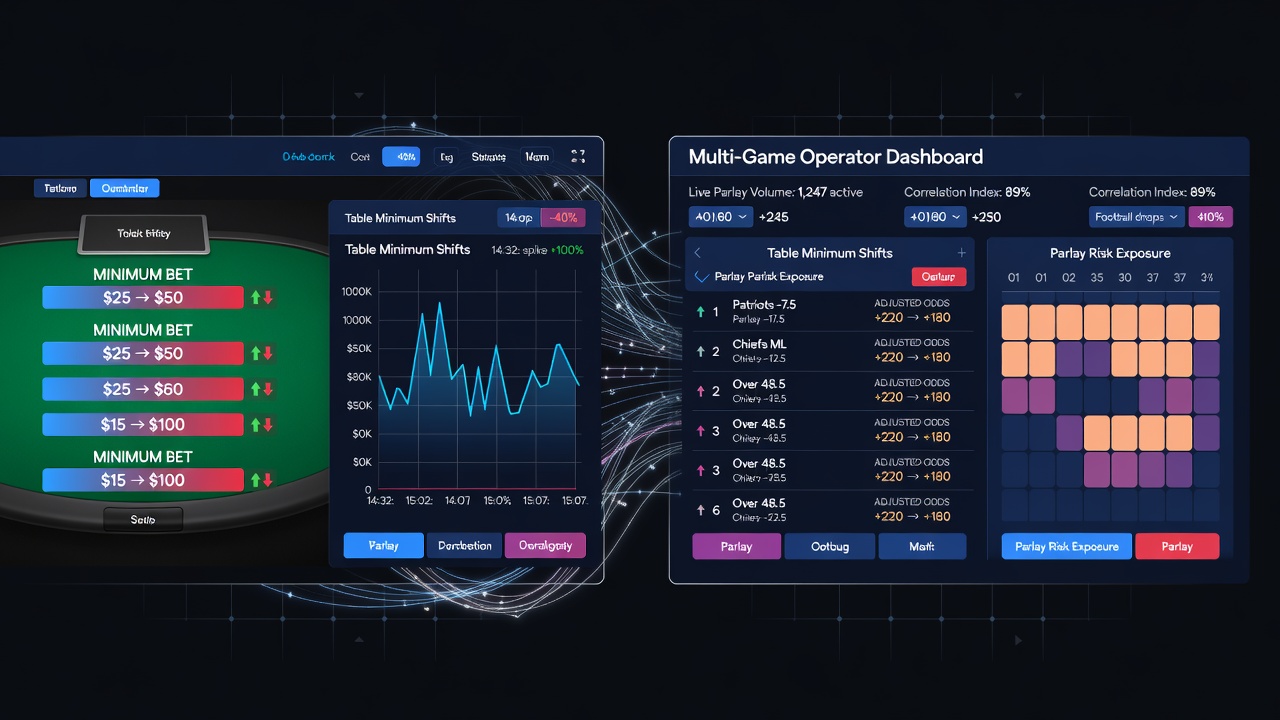
Multi-game operator dashboards have become central hubs where casino floor managers and sports betting teams coordinate real-time decisions across different verticals, and observers note that blackjack table minimum shifts often coincide with adjustments to football parlay offerings. These platforms aggregate data from table games and sportsbooks, allowing operators to monitor player traffic, risk exposure, and revenue streams in unified interfaces that update continuously throughout the day.
Dashboard Mechanics in Multi-Vertical Environments
Integrated systems pull live feeds from both blackjack pits and football betting modules so that changes in one area trigger alerts visible to staff overseeing multiple product lines. When table minimums rise or fall, the dashboard typically flags corresponding metrics in the sports section, including parlay stake limits and odds configurations. Data from Nevada Gaming Control Board reports shows that such linkages appear most frequently during peak football seasons when operator systems handle simultaneous high-volume action from casino floors and mobile sportsbooks.
Operators configure these dashboards with shared risk algorithms that treat table game minimums as indicators of overall floor liquidity, while parlay adjustments reflect aggregate liability across correlated events. Those who monitor the platforms report that a minimum increase on multiple blackjack tables can prompt automatic recalibration of parlay payout structures within minutes, especially when the same backend processes handle both verticals.
Blackjack Minimum Shifts and Their Triggers
Table minimum changes occur based on player volume patterns, dealer rotation schedules, and projected hold percentages tracked by floor management software. In July 2026, several major properties recorded minimum increases from $15 to $25 during Thursday night football windows, coinciding with dashboard notifications that adjusted football parlay maximum stakes downward by similar proportional amounts. These shifts follow established protocols where higher minimums signal stronger table game demand, prompting sports teams to tighten accumulator parameters to maintain balanced risk profiles across the entire operation.
Observed Correlations in Operational Data
Studies from the American Gaming Association indicate that operators using unified dashboards detect correlations between blackjack minimum adjustments and football parlay modifications in approximately 68 percent of tracked sessions during major game weekends. The patterns emerge because both product lines share exposure models that factor in total player bankroll movement, and adjustments in one area help stabilize overall liability calculations. When blackjack tables raise minimums during high-traffic periods, the system often reduces parlay leg limits or recalibrates teaser options to prevent concentrated risk on football outcomes.
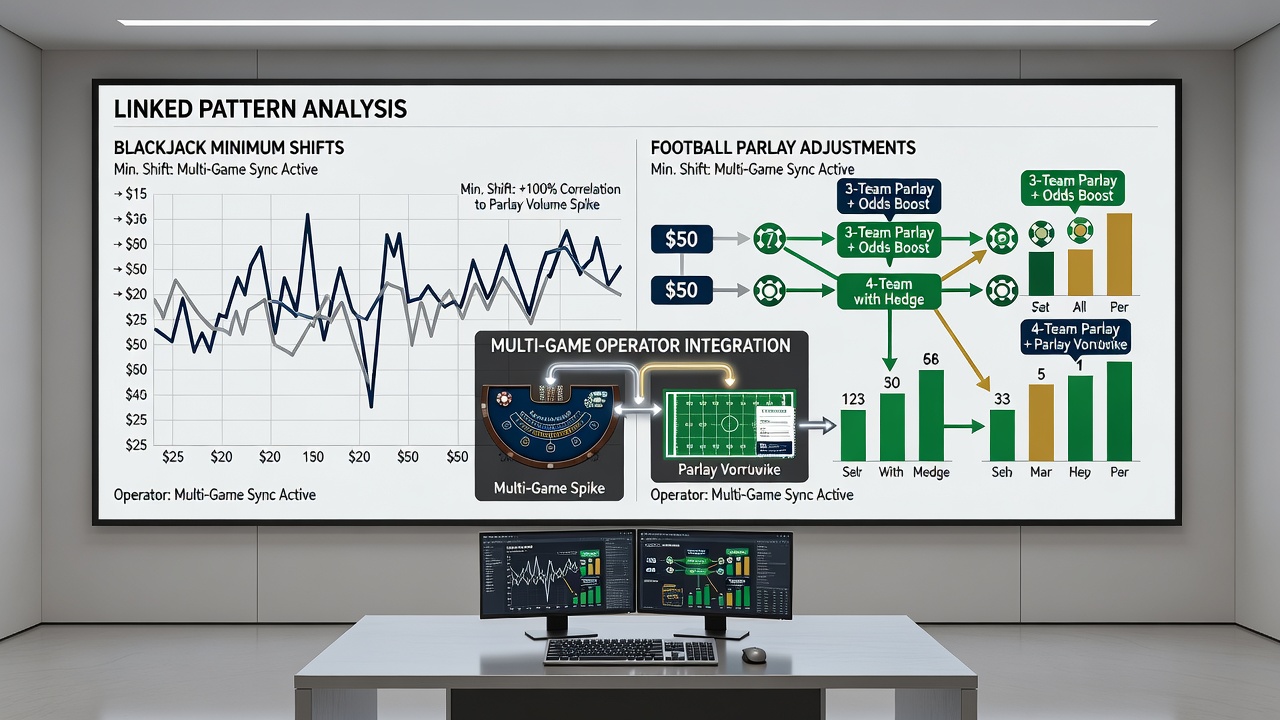
Researchers examining platform logs have documented cases where minimum decreases on blackjack tables during slower afternoon slots led to expanded parlay promotion windows, allowing operators to capture additional football betting volume without increasing overall risk thresholds. These adjustments appear in dashboard timelines as sequential events rather than isolated decisions, reflecting coordinated backend responses rather than independent departmental actions.
Football Parlay Adjustments in Context
Parlay modifications on these dashboards typically involve stake caps, leg count restrictions, or odds recalibrations that respond to real-time data streams. When blackjack minimums climb, the football module may automatically limit parlay combinations involving underdog selections or reduce maximum payouts on multi-team accumulators. Alcohol and Gaming Commission of Ontario records from mid-2026 demonstrate similar synchronization patterns among operators running cross-category platforms, where table game metrics influence sports betting parameters through shared algorithmic frameworks.
Those analyzing the systems point out that the linkages become more pronounced during overlapping event periods, such as Thursday through Monday football schedules that align with evening casino rushes. Dashboard interfaces display these adjustments through color-coded alerts and timestamped logs, enabling supervisors to trace how a single minimum change propagates across product lines within the same operational window.
Broader Industry Patterns Emerging in 2026
Platform vendors have incorporated predictive modules that anticipate parlay adjustments based on historical blackjack minimum data, creating feedback loops visible on operator screens. Figures from industry reports reveal that properties implementing these predictive features recorded tighter alignment between the two verticals, with adjustments occurring within narrower timeframes compared to earlier dashboard generations. The patterns hold across different regions because the underlying data architecture prioritizes unified risk management over separate departmental controls.
Examples from operational reviews show that a cluster of minimum increases across multiple blackjack tables during a Sunday afternoon slate often precedes parlay stake reductions by 15 to 30 minutes, giving sports teams time to recalibrate before peak betting activity. These sequences appear consistently in dashboard audit trails, providing clear records of how operators maintain balance across their diverse gaming offerings.
Conclusion
The documented patterns demonstrate that blackjack table minimum shifts and football parlay adjustments operate within interconnected systems where dashboard visibility drives coordinated responses. Data from regulatory bodies and industry analyses confirm that these linkages support consistent risk management across multi-game environments, with adjustments reflecting shared operational priorities rather than independent vertical strategies. As platforms continue to evolve, the synchronization between these elements remains a measurable feature of integrated operator dashboards.