Mapping Player Behavior Shifts Across Poker Rooms and Sportsbook Sections During Bonus Activation Windows
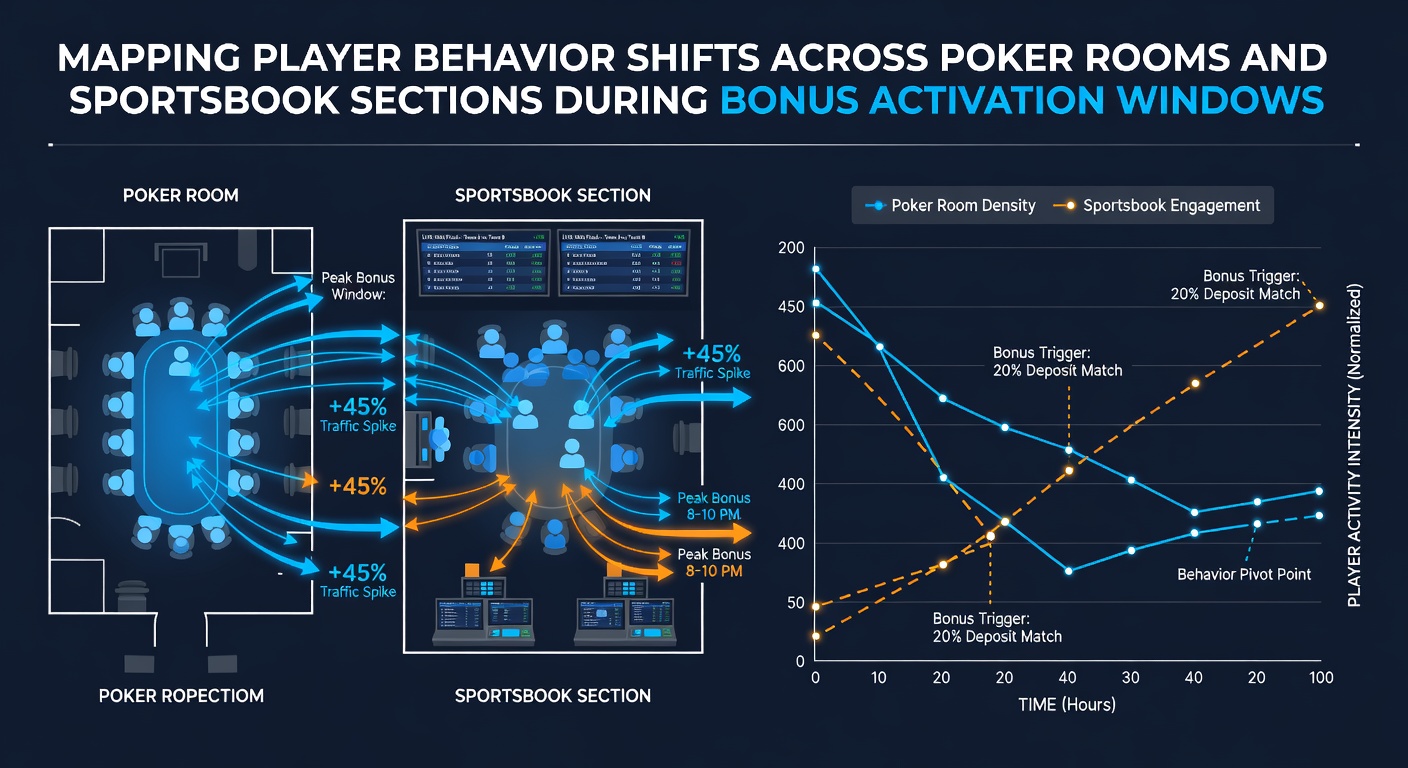
Platforms track how users redistribute their time and wagers once promotional windows open, and analysts compile these movements into heat maps that reveal consistent migration trends across poker rooms and sportsbook interfaces. Data collected from multiple operators in early 2026 demonstrates that bonus activation triggers measurable reallocations of player attention, with certain sections gaining traffic while others experience temporary drops in engagement.
Data Collection Methods Used by Operators
Tracking systems log session starts, game selections, and wager volumes at precise intervals before and after bonus triggers fire, and these logs feed into behavioral models that segment users by preferred vertical. Operators in regions such as New Jersey and Ontario combine account-level timestamps with navigation paths to build time-series visualizations, and researchers cross-reference these datasets with regulatory filings to confirm accuracy. In June 2026, aggregated reports from several North American platforms indicated that bonus windows lasting between four and twelve hours produced the clearest redistribution signals, allowing analysts to isolate short-term versus sustained shifts.
Observed Movements Within Poker Rooms
During bonus activation, cash-game tables often see an influx of players who previously spent time in tournament lobbies, and this pattern emerges because many promotions tie directly to rake contributions or hand counts completed within the active window. Studies of session data show that low-stakes tables experience higher occupancy rates while mid-stakes games lose participants who migrate toward faster formats that accumulate qualifying actions more quickly. Observers note that sit-and-go tournaments sometimes register reduced registration velocity because players prioritize ring games that align with bonus multipliers, yet overall poker room handle remains stable or increases slightly when the promotion rewards volume over individual pot size.
Transitions Into and Out of Sportsbook Sections
Users frequently move from poker interfaces into sportsbook sections when live-event bonuses activate, and this occurs because in-play markets allow rapid placement of smaller wagers that satisfy playthrough conditions. Platform logs from multiple operators reveal that football and basketball live odds attract the largest share of these crossovers, while pre-match tennis and horse racing markets retain steadier traffic unaffected by the bonus cycle. In June 2026, figures compiled by the New Jersey Division of Gaming Enforcement showed elevated handle in live soccer and basketball during overlapping promotional periods, confirming that players treat sportsbook interfaces as efficient venues for meeting bonus criteria without abandoning the platform entirely.
Regional Variations and Platform Differences
European operators licensed by the Malta Gaming Authority document similar redistribution effects, although the timing of peak shifts aligns more closely with evening football fixtures rather than North American basketball schedules. Australian platforms regulated under state gaming commissions report that bonus windows coinciding with rugby league matches produce pronounced movement from poker rooms into rugby-specific betting markets. These geographic differences arise because local sporting calendars dictate which live markets offer the quickest route to bonus completion, and operators adjust interface prompts accordingly to guide users toward sections that maximize both engagement and regulatory compliance.
Impact on Session Duration and Vertical Switching
Session-length metrics indicate that players who cross between poker and sportsbook sections during bonus periods maintain longer overall platform time compared with those who remain in a single vertical, and this extension occurs because alternating between game types helps users pace their qualifying activity. Analysts at research institutions have mapped these multi-vertical sessions as sequences of short poker bursts followed by targeted sportsbook wagers, and the resulting data shows reduced churn rates when promotions encourage such alternation rather than concentrating activity in one area. Platform telemetry further reveals that users rarely return to their original section immediately after completing bonus requirements, instead lingering in the secondary vertical for additional non-qualifying play.
Conclusion
Comprehensive mapping of player behavior during bonus activation windows demonstrates repeatable patterns of movement between poker rooms and sportsbook sections, driven by the structure of promotional requirements and the availability of suitable markets. Operators continue to refine tracking methodologies and interface designs to accommodate these documented flows, while regulatory bodies across multiple jurisdictions receive periodic summaries that support ongoing oversight of promotional practices. The data accumulated through June 2026 and prior periods provides a factual baseline for understanding how bonus mechanics shape user navigation across integrated gaming platforms.